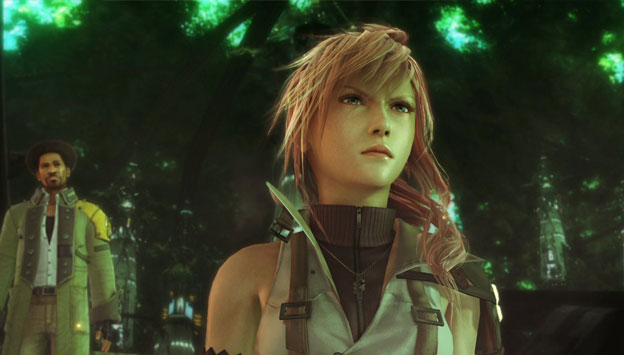
What Are The Best Retro Games Ever Made?
Are you an enthusiast of retro games? Would you like to know what the best retro games ever made are? Then this piece of information is for you, because I have gathered some of the most remarkable retro games ever made in here.
Some retro games are still very popular to this day and were even adapted to mobile devices, and some of them are not popular anymore and were forgotten in the retro classics archive. However, some of the forgotten games don't really deserve to be forgotten because they are truly awesome, so I will make sure to introduce not only the games that are still popular today.
Here are some of the best retro games ever made:
Frogger - Frogger is a 1981 arcade games developed by Konami. The idea of the game is to direct frogs to their homes one by one by crossing a busy road and navigating a river full of hazards. The Frogger coin-op is an early example of a game with more than one CPU, and it was definitely the first game of its type.
Space Invaders - Space Invaders is an arcade video game developed by Tomohiro Nishikado. It was released in 1978 and was originally manufactured and sold by Taito in Japan. Later on, it was licensed for production in the United States by a different company. Space Invaders is one of the earliest shooting games that were ever released, and the mission in the game is to defeat waves of aliens with a laser cannon and score as high as possible. This game was a huge success in its time and it formed the basis of the entire shooting genre.
Star Wars - Star Wars was released in 1983 by Atari Inc. It was highly popular back in time and is still considered a cult game and has many loyal fans all around the world. The game is a first person space simulator that simulates the attack on the Death Star from the film Star Wars (which was released in 1977). The game is composed of 3D color vector graphics and it was developed during the Golden Age of Arcade Games. It is considered the fourth most popular game of all time according to the readers of "Killer List of Videogames". Star Wars is one of the old classical video games that are very big and popular even nowadays, after more than two decades.
There are many amazing retro games that should belong in the list of the best retro games ever made, but since I couldn't list them all, the three that are mentioned above definitely represent this category very well.
The GameOn Project http://www.GameOnProject.com/?f=Ezine
Visit the GameOn Project to find your new favorite mobile games. Simply let us know what your gaming preferences are and we will give you the best game recommendations that match your taste!
Article Source: http://EzineArticles.com/expert/Billy_Mike/2091650
Tuesday, January 10, 2017
Should Games Skip Cutscenes Altogether?
A cutscene or event scene (sometimes in-game cinematic or in-game movie) is a sequence in a video game that is not interactive, breaking up the gameplay. Such scenes could be used to show conversations between characters, bring exposition to the player, set the mood, reward the player, introduce new gameplay elements, show the effects of a player's actions, create emotional connections, improve pacing or foreshadow future events.
Cutscenes often feature "on the fly" rendering, using the gameplay graphics to create scripted events. Cutscenes can also be pre-rendered computer graphics streamed from a video file. Pre-made videos used in video games (either during cutscenes or during the gameplay itself) are referred to as "full motion videos" or "FMVs". Cutscenes can also appear in other forms, such as a series of images or as plain text and audio.
Videogames as a medium for storytelling have often taken cues from movies, and the clearest example of this is the use of cutscenes. Pac-Man is quite often said to be the first game that used cutscenes rather than transitioning directly from level to level with no intermission. After the player beats each stage, it would play a short vignette depicting simple scenes of Pac-Man and ghosts chasing each other.
Whilst these little scenes are quite obviously a long way from how modern cutscenes are used in games, the core concept is the same.
The game takes away control of the character from the player for a sequence to introduce some sort of new information. The duration of these sequences can vary widely - Konami's Metal Gear Solid series is infamous for having lengthy cutscenes, with Metal Gear Solid 4 clocking it at more than eight hours of cutscenes - and can be used for a wide variety of purposes.
They are used to introduce characters, develop established ones, provide backstory, atmosphere, dialogue and more.
However, despite their ubiquity in modern big budget games, cutscenes are not necessarily the best way to tell a story in a game. There have been many highly acclaimed games that used few cutscenes, instead preferring to allow the player to control the character throughout the whole game.
Half-Life 2 by Valve Software is currently the all time highest scoring game for PC on review aggregation site Metacritic, and it only has one cutscene at each end. Control is rarely taken away from the player for more than a few moments - excepting an on rails sequence towards the end - and much of the background information that would be shown in a cutscene elsewhere is instead shown through scripted events or background details in the environment.
But are Half-Life 2's unskippable, scripted sequences that different from cutscenes? After all, the player often cannot progress until other characters finish their assigned actions and dialogue - so why not just use traditional cutscenes and be done with it? To get truly unique experiences, we mustfirst look at what makes videogaming unique as a medium for storytelling. Unlike film, where the viewer has no control over the action, or traditional tabletop games, where players actions have verylittle in the way of visual outcomes, videogames provide an unique opportunity to merge interactivity and storytelling. Games like Gone Home, Dear Esther and other games in the so called 'walking simulator' genre have been lauded as great examples of the sort of storytelling that can be unique to games.
However, to some gamers, these games are presenting an entirely different problem - although they rarely take control away from the player, they also offer very little in the way of gameplay themselves. Indeed, Dear Esther has no way the player can affect the world around them - the only action that can be taken is to walk along a predetermined path to the end of the game. There is no way to 'lose,' no interaction with the environment, just what amounts to a scenic tour with some overlaid narration. So, despite the lack of cutscenes in the game, the almost complete lack of player control and interaction in the first place means that there is little to differentiate it from an admittedly quite protracted cutscene.
As videogames are currently exist, there seems to exist a sort of dichotomy between traditional storytelling and gameplay. For a game to tell a story to a player, there must be some degree of limitation in what the player can do - either a temporary one in the form of a cutscene or scripted sequence, or by limiting the players actions for the course of the game. Perhaps future games will be able to integrate a great deal of player interaction with compelling storytelling. But that won't be accomplished by taking the players control away and forcing them to watch a short movie instead of letting them play the game.
Dan is the owner of Mangotron which is an Indie Games news website. Mangotron covers indie game news views, interviews and much more.
Article Source: http://EzineArticles.com/expert/Dan_Khan/2159891
A cutscene or event scene (sometimes in-game cinematic or in-game movie) is a sequence in a video game that is not interactive, breaking up the gameplay. Such scenes could be used to show conversations between characters, bring exposition to the player, set the mood, reward the player, introduce new gameplay elements, show the effects of a player's actions, create emotional connections, improve pacing or foreshadow future events.
Cutscenes often feature "on the fly" rendering, using the gameplay graphics to create scripted events. Cutscenes can also be pre-rendered computer graphics streamed from a video file. Pre-made videos used in video games (either during cutscenes or during the gameplay itself) are referred to as "full motion videos" or "FMVs". Cutscenes can also appear in other forms, such as a series of images or as plain text and audio.
Videogames as a medium for storytelling have often taken cues from movies, and the clearest example of this is the use of cutscenes. Pac-Man is quite often said to be the first game that used cutscenes rather than transitioning directly from level to level with no intermission. After the player beats each stage, it would play a short vignette depicting simple scenes of Pac-Man and ghosts chasing each other.
Whilst these little scenes are quite obviously a long way from how modern cutscenes are used in games, the core concept is the same.
The game takes away control of the character from the player for a sequence to introduce some sort of new information. The duration of these sequences can vary widely - Konami's Metal Gear Solid series is infamous for having lengthy cutscenes, with Metal Gear Solid 4 clocking it at more than eight hours of cutscenes - and can be used for a wide variety of purposes.
They are used to introduce characters, develop established ones, provide backstory, atmosphere, dialogue and more.
However, despite their ubiquity in modern big budget games, cutscenes are not necessarily the best way to tell a story in a game. There have been many highly acclaimed games that used few cutscenes, instead preferring to allow the player to control the character throughout the whole game.
Half-Life 2 by Valve Software is currently the all time highest scoring game for PC on review aggregation site Metacritic, and it only has one cutscene at each end. Control is rarely taken away from the player for more than a few moments - excepting an on rails sequence towards the end - and much of the background information that would be shown in a cutscene elsewhere is instead shown through scripted events or background details in the environment.
But are Half-Life 2's unskippable, scripted sequences that different from cutscenes? After all, the player often cannot progress until other characters finish their assigned actions and dialogue - so why not just use traditional cutscenes and be done with it? To get truly unique experiences, we mustfirst look at what makes videogaming unique as a medium for storytelling. Unlike film, where the viewer has no control over the action, or traditional tabletop games, where players actions have verylittle in the way of visual outcomes, videogames provide an unique opportunity to merge interactivity and storytelling. Games like Gone Home, Dear Esther and other games in the so called 'walking simulator' genre have been lauded as great examples of the sort of storytelling that can be unique to games.
However, to some gamers, these games are presenting an entirely different problem - although they rarely take control away from the player, they also offer very little in the way of gameplay themselves. Indeed, Dear Esther has no way the player can affect the world around them - the only action that can be taken is to walk along a predetermined path to the end of the game. There is no way to 'lose,' no interaction with the environment, just what amounts to a scenic tour with some overlaid narration. So, despite the lack of cutscenes in the game, the almost complete lack of player control and interaction in the first place means that there is little to differentiate it from an admittedly quite protracted cutscene.
As videogames are currently exist, there seems to exist a sort of dichotomy between traditional storytelling and gameplay. For a game to tell a story to a player, there must be some degree of limitation in what the player can do - either a temporary one in the form of a cutscene or scripted sequence, or by limiting the players actions for the course of the game. Perhaps future games will be able to integrate a great deal of player interaction with compelling storytelling. But that won't be accomplished by taking the players control away and forcing them to watch a short movie instead of letting them play the game.
Dan is the owner of Mangotron which is an Indie Games news website. Mangotron covers indie game news views, interviews and much more.
Article Source: http://EzineArticles.com/expert/Dan_Khan/2159891
Monday, January 9, 2017
How to Play Counter-Strike ?
Why I Love Counter-Strike/How to Play Counter-Strike
Counter-Strike (officially abbreviated as CS) is a series of multiplayer first-person shooter video games, in which teams of terrorists and counter-terrorists battle to, respectively, perpetrate an act of terror (bombing, hostage-taking) and prevent it (bomb defusal, hostage rescue). The series began on Windows in 1999 with the first version of Counter-Strike. It was initially released as a modification for Half-Life and designed by Minh "Gooseman" Le and Jess "Cliffe" Cliffe, before the rights to the game's intellectual property were acquired by Valve Corporation, the developers of Half-Life.
The game was followed-up with Counter-Strike: Condition Zero, developed by Turtle Rock Studios and released in 2004. Later that same year, Counter-Strike: Source was released by Valve. Released only eight months after Counter-Strike: Condition Zero, in November 2004, the game was a remake of the original Counter-Strike and the first in the series to run on Valve's newly created Source engine.The fourth game in the main series to have been developed by Valve, Counter-Strike: Global Offensive, was released in 2012 for Windows, OS X, Xbox 360, and PlayStation 3. Hidden Path Entertainment, who also worked on Counter-Strike: Source post-release, helped to develop the game alongside Valve. Several spin-off titles have been released for Asian territories.
Today I like to talk about an integral part of my computer/technology career. Unexpectedly, it is my skill on the game called Counter-Strike. I would like to impart to my readers my knowledge which helped me to be regarded as sort of an "expert" on the field of the said game. More than anything, I want to teach you how be the best on it. Also, I would like to discuss the significance it has in my life and the potential it has to touch others' lives too.
I can't imagine life without Counter-Strike (specifically the version 1.3 one). Needless to say, you can tell that I am nostalgic about it. I heard about the latest version that the makers of Counter-Strike are developing right now, which is Counter-Strike Global Offensive. I can already see the importance of your experience on playing Counter-Strike 1.3 on becoming good on that latest version; which can become handy especially now that on the tournaments of these stuff, you can get something over a million dollars as a prize.
So, let's go into the heart of it: how to be good on counter-strike 1.3?
Number 1, Brightness. Enemies are hard to see with the default brightness of the game. Meaning, if you are not the server of the game this is a necessity (this might seem unnecessary but trust me it is. It sounds senseless but it is not). So, to be able to do it, type "map de_dust" on the console. Wait for the console to take you to (guess where) de_dust. After, click ~, and type and enter on the console "brightness 999." After that, enter "map de_dust" again. Wait until it gets you to de_dust again. Just now, it has the perfect brightness which will surely help you differentiate someone who is your enemy and friend on the game.
Number 2: Controls. Before even starting to play the game, go to the controls part. Click defaults. After that, change how you can buy with F1 instead of B; and how to buy bombs with F4 instead of M. For those of you who are curious, this would make you buy weapons, ammunition, and bombs faster which will make you more efficient on the game. Note, buy ammunitions with F1 + 6 and F1 + 7, instead of the alternative version. Trust me on this.
Number 3: Don't be the server as much as possible. This is quite crucial. The most important reason why is that you would not be able to use technique number 1, which is the brightness part. There is simply no way of doing it. Plus, if you are playing in an internet cafe, which is what most likely is the case (because that is the easiest way to play it with other people; trust me), you cannot quit just anytime that you want because you would annoy other players. When you quit the game, other players will be disconnected to the game too. I would not worry so much on this certain technique, but I just thought you should know something about it.
Number 4: Weapon choice. Let's face the elephant in the room. The only best weapon choice for the game is the sniper one. Pair it with pistol F1 + 1 and you have a perfect combo. The key here is practice. Train using the sniper one so that you kill enemies precisely as fast as possible and you would always be good to go. Plus, if you master using your pistol to kill enemies with headshots that would be a plus. Not that I am overselling, you can try other weapons but this would always be the perfect combo/one.
Number 5: Strategic positioning on the game. This is about where you go on the game (the path you choose). The trick here is choosing maximum efficiency. What I mean here is choose your position on the game so that you balance your safety and ability to kill enemies in the best way. Players on this game are very vulnerable. You can get killed in literally an instant. Protect yourself as much as possible without losing your ability to kill enemies. Since you already chose your perfect set of weapons, this would be like a walk in the park. With a sniper, choose a place where you can use it such that you are hidden but at the same time has the vision to hunt your preys.
Number 6: Map choice: you only have three options for this: cs_deathmatch, de_dust, de_dust2. Why? It is really tempting to say just because when you are already into the game, because it is just the way it is. However, for beginners out there, it is just the way it is because it would make the game fairer if you know what I mean. There is no special treatment and/or unfair advantage for either teams. Therefore, players equally enjoy the game (which is always a good thing).
Needless to say, it has a significant impact on my life. More than anything, it taught me how to be a team player and accept defeat graciously. It is a game where you can be yourself, make mistakes, get defeated or win with no pressure or someone judging you. Personally, it is a good environment to be in as a child. It might also added to my tech-savvyness. Despite it's violent connotation, I disagree that it has negative impacts on anybody. So far, it didn't lead me to be violent to other people. Contrary, it made me more compassionate, warm, and social.
I hope this helped you become better on Counter-Strike. Otherwise, if it made you curious about the game, great! Good luck playing it! I promise you it would be worth it. Try it as fast as possible now!
Article Source: http://EzineArticles.com/expert/Joanna_Marie_Bautista_Clark/2293189
Counter-Strike (officially abbreviated as CS) is a series of multiplayer first-person shooter video games, in which teams of terrorists and counter-terrorists battle to, respectively, perpetrate an act of terror (bombing, hostage-taking) and prevent it (bomb defusal, hostage rescue). The series began on Windows in 1999 with the first version of Counter-Strike. It was initially released as a modification for Half-Life and designed by Minh "Gooseman" Le and Jess "Cliffe" Cliffe, before the rights to the game's intellectual property were acquired by Valve Corporation, the developers of Half-Life.
The game was followed-up with Counter-Strike: Condition Zero, developed by Turtle Rock Studios and released in 2004. Later that same year, Counter-Strike: Source was released by Valve. Released only eight months after Counter-Strike: Condition Zero, in November 2004, the game was a remake of the original Counter-Strike and the first in the series to run on Valve's newly created Source engine.The fourth game in the main series to have been developed by Valve, Counter-Strike: Global Offensive, was released in 2012 for Windows, OS X, Xbox 360, and PlayStation 3. Hidden Path Entertainment, who also worked on Counter-Strike: Source post-release, helped to develop the game alongside Valve. Several spin-off titles have been released for Asian territories.
Today I like to talk about an integral part of my computer/technology career. Unexpectedly, it is my skill on the game called Counter-Strike. I would like to impart to my readers my knowledge which helped me to be regarded as sort of an "expert" on the field of the said game. More than anything, I want to teach you how be the best on it. Also, I would like to discuss the significance it has in my life and the potential it has to touch others' lives too.
I can't imagine life without Counter-Strike (specifically the version 1.3 one). Needless to say, you can tell that I am nostalgic about it. I heard about the latest version that the makers of Counter-Strike are developing right now, which is Counter-Strike Global Offensive. I can already see the importance of your experience on playing Counter-Strike 1.3 on becoming good on that latest version; which can become handy especially now that on the tournaments of these stuff, you can get something over a million dollars as a prize.
So, let's go into the heart of it: how to be good on counter-strike 1.3?
Number 1, Brightness. Enemies are hard to see with the default brightness of the game. Meaning, if you are not the server of the game this is a necessity (this might seem unnecessary but trust me it is. It sounds senseless but it is not). So, to be able to do it, type "map de_dust" on the console. Wait for the console to take you to (guess where) de_dust. After, click ~, and type and enter on the console "brightness 999." After that, enter "map de_dust" again. Wait until it gets you to de_dust again. Just now, it has the perfect brightness which will surely help you differentiate someone who is your enemy and friend on the game.
Number 2: Controls. Before even starting to play the game, go to the controls part. Click defaults. After that, change how you can buy with F1 instead of B; and how to buy bombs with F4 instead of M. For those of you who are curious, this would make you buy weapons, ammunition, and bombs faster which will make you more efficient on the game. Note, buy ammunitions with F1 + 6 and F1 + 7, instead of the alternative version. Trust me on this.
Number 3: Don't be the server as much as possible. This is quite crucial. The most important reason why is that you would not be able to use technique number 1, which is the brightness part. There is simply no way of doing it. Plus, if you are playing in an internet cafe, which is what most likely is the case (because that is the easiest way to play it with other people; trust me), you cannot quit just anytime that you want because you would annoy other players. When you quit the game, other players will be disconnected to the game too. I would not worry so much on this certain technique, but I just thought you should know something about it.
Number 4: Weapon choice. Let's face the elephant in the room. The only best weapon choice for the game is the sniper one. Pair it with pistol F1 + 1 and you have a perfect combo. The key here is practice. Train using the sniper one so that you kill enemies precisely as fast as possible and you would always be good to go. Plus, if you master using your pistol to kill enemies with headshots that would be a plus. Not that I am overselling, you can try other weapons but this would always be the perfect combo/one.
Number 5: Strategic positioning on the game. This is about where you go on the game (the path you choose). The trick here is choosing maximum efficiency. What I mean here is choose your position on the game so that you balance your safety and ability to kill enemies in the best way. Players on this game are very vulnerable. You can get killed in literally an instant. Protect yourself as much as possible without losing your ability to kill enemies. Since you already chose your perfect set of weapons, this would be like a walk in the park. With a sniper, choose a place where you can use it such that you are hidden but at the same time has the vision to hunt your preys.
Number 6: Map choice: you only have three options for this: cs_deathmatch, de_dust, de_dust2. Why? It is really tempting to say just because when you are already into the game, because it is just the way it is. However, for beginners out there, it is just the way it is because it would make the game fairer if you know what I mean. There is no special treatment and/or unfair advantage for either teams. Therefore, players equally enjoy the game (which is always a good thing).
Needless to say, it has a significant impact on my life. More than anything, it taught me how to be a team player and accept defeat graciously. It is a game where you can be yourself, make mistakes, get defeated or win with no pressure or someone judging you. Personally, it is a good environment to be in as a child. It might also added to my tech-savvyness. Despite it's violent connotation, I disagree that it has negative impacts on anybody. So far, it didn't lead me to be violent to other people. Contrary, it made me more compassionate, warm, and social.
I hope this helped you become better on Counter-Strike. Otherwise, if it made you curious about the game, great! Good luck playing it! I promise you it would be worth it. Try it as fast as possible now!
Article Source: http://EzineArticles.com/expert/Joanna_Marie_Bautista_Clark/2293189
Video Games - The Perfect Escape?
For most young people, playing games on a computer, video game console, or handheld device is just a regular part of the day. Most are able to juggle the multiple demands of school, sports, work or chores, and family life. Gaming becomes an addiction when it starts to interfere with a person's relationships or their pursuit of other goals, such as good grades or being a contributing member of a sports team.
Computer and video games, especially the massive multi-online role-playing games (or MMORPGs) such as "World of Warcraft," allow players to behave very differently from their normal persona. A shy child can suddenly became gregarious; a passive child can become aggressive.
Young people, who often feel powerless in their daily lives, suddenly have the ability to command armies, drive (and crash) cars, and wreak havoc on a virtual world with no real-life consequences. This is seductive!
And when that boy or girl is already finding it a challenge in the "real world" to make friends, computer and video games offer a way to interact with others in their "virtual world," without the distress of face-to-face interactions.
Video game and Internet addiction are not actual Diagnostic and Statistical Manual of Mental Disorders (DSM)-IV classifications, although the American Medical Association is reviewing research in order to determine whether they should be included in the next update of the manual in 2010. Many mental health professionals feel that video games are similar to gambling as an addictive process. By some estimates, as many as 10 percent of gamers exhibit addictive behavior.
Why oh why did you say yes to that last shandy? The kebab seemed like a good idea but your mouth now resembles the inner lining of Phil Jupiter's underpants. And to top it all off, you're stuck in a lava filled dungeon and some b*****d has kidnapped your princess. Where did your life go so
horribly wrong?
I've got news for you, it's much, much worse. It's not that you're hungover playing Super Mario Brothers, it's that you spend your life "working" at a computer located in a sterile office surrounded by drones. Your only escape? A Friday night binge drinking session down in Clapham, tonsil tennis with a rather suspect femme fatale and bouncing around 8-bit levels crushing the skulls of Goombas with your immense chubby Italian plumber girth the next morning (she didn't come home with you).
Computer games started out as something completely innocent. I remember my cousins having a version of Pong that despite being an absolute nightmare to plug into the telly, was good fun for ten minutes. Bouncing the ball around with the paddles was hardly Wimbledon. What was, was the 8-bit version of the AELTC's prestige tournament which was one of the first games I played on the Master System. Still to this day the game mesmerises me, with added career mode, I can't help but feel I'm there on Centre Court. Especially as I couldn't play tennis for toffee.
These days, games such as the Grand Theft Auto and Halo franchises take escapism to whole new levels, allowing you to explore entire cities and indulge your wildest fantasies whilst piping hordes of bad guys. There's a magazine on my desk right now emblazoned with the word "hero", if only. And whilst escapism is almost at its absolute peak (barring virtual reality), it started way back in the 80s and had as much of an impact then as it does now.
Adult life fundamentally, hasn't changed much in the last thirty years. Despite numerous advances in technology, supposedly to make life easier, for most of us it's the usual 9 to 5. Slaving away to line someone else's pockets only to come home at some ungodly hour completely exhausted. Eat your dinner, stick on the telly, sleep, repeat. Rather crudely, I hypothesise life requires five different needs: achievement; relaxation; emulation; competition and belonging. At the moment, sitting here in a non-descript office I feel tense, bored, lonely and as if this is just another day to kill on a road that is seemingly going nowhere. No need is being fulfilled, I want to be at home playing video games.
Achievement is the easy one. Those who are successful in life and who feel they are living a good life can point back to a string of achievements. Whether it's continual progression through the ranks at work, bringing up offspring or jumping out of a plane, nothing beats feeling a sense of achievement. For those starved of such events, video games offer up an easy alternative and its impact is almost immediate. Going back to early arcade games such as Pac-Man and Asteroids, you're instantly rewarded with level progression and score accumulation (sometimes to reach the feted leader board). Home entertainment systems such as the ZX Spectrum brought games like Manic Miner to the fore. This rise raises the other point that these needs don't just relate to adult life but to children as well. For kids growing up, a sense of achievement can be gained from doing well at school, well at Physical Education, being praised for good attendance etc... How often would this really happen? Sometimes at primary school, I would feel a greater sense of accomplishment after nailing a few levels of Sonic than at anything I'd done during the day. With the xbox360 console, Microsoft brought the "Achievement" points system based on unlocking hidden secrets or even just by completing levels. Why did they do this? We all love rewards, even more so when they're obvious. As unnecessary as this development was, it adds another level of achievement to the subtle one already existing.
This brings me to the next "need" - relaxation. Or should I say, Relaxation through detachment. There is no point in me going home to play a computer game where the protagonist is a Customer Service advisor who has to answer the phone and respond to emails all day. They say that during lunchtime it's advisable to have lunch outside of the office, so that your mind is taken off work and relaxed accordingly. Video games work on the same principal as in they can take you out of work, out of your home life and into something much more wondrous. The aforementioned Super Mario Bros is a great example. I believe it's the first true example of an ethereal world where you can explore and unlock hidden rewards at whim. Earlier consoles and computers had games containing hidden levels given, but the graphics and memory available pre-1985 struggled to do anything on this scale. Throw in a hero story where you've got to rescue a princess and you've got the whole package. I could talk about detachment all day long but the upshot is that video games take you to another world at the flick of a button where you can easily forget what your life is really about.
As I mentioned previously, I was bog awful at Tennis when I was a kid. Someone who was not awful at tennis was Stefan Edberg. Although Wimbledon on the MS was licensed, it contained no real players' names. But my word, did one of the characters look like the Swedish maestro himself. When you're growing up, role models are important. That seems like a rather obvious thing to say but how many kids lack the proper role models in everyday life? We look up to people and we want to emulate them. We see them achieve great things and we want to achieve them ourselves. When we can't do something, video games (especially sports titles) are an easy way of emulating our heroes. I played World Cup Italia 90 on the Mega Drive way more than I should have purely because it was the only way of recreating the tournament that I had available. Emulation even boils down to just wanting to be said Italian plumber hero (one was also rather useless with the ladies) or a spiky blue hedgehog thwarting an evil genius.
Emulation follows on to competition. There is nothing like beating a game. All that coding and you've still beaten the CPU. Have that Edberg. It's also great to prove you're the best at the something, that you're better than your peers. At work, I have few peers simply due to the mediocrity of my work. Do I want to be better than them? The feeling is hardly tangible. Competition is good for the human spirit. Constantly being challenged is how people get better and successful people thrive on it. The rewards are sometimes obvious, a big trophy, a big pay rise - but sometimes they're not. Video games offer competition on all levels. Beat the CPU, beat your friends, beat the world. Video games offer a challenge when life falls on its backside. Want an arena to prove you're better than your mates? Hold a Days of Thunder on the NES competition (not all were impressed... ). Multiplayer games existed in abundance from the days of Pong and now video game tournaments have evolved into a multi-million dollar industry of their own.
That brings me to my final point - belonging. Sega or Nintendo? If you're into retro gaming that question alone is probably stirring something inside you. Why? Because choosing a console isn't just about choosing a machine to play with, it's about choosing a gang, a way of life that's got be better than its counterpart. Kids and adults alike feel segregation on a daily basis. I was lucky at school as I had good friends with whom I still socialise with to this day. Others were not so lucky. When you move into the professional world it's only natural that you want to work for a company where you belong. In your personal life, it's only natural to want to live somewhere in a home with people you love and where you feel you belong. Even before online gaming with its vast communities and friendship came into existence, simply by saying in the playground whether you were a Mega Drive or SNES guy started positive chat about Sonic or Mario alike. They weren't just consoles, it was who you were.
As much as a holiday might satisfy your relaxation needs or going to a football match satisfy your need to belong, there is nothing as complete as video games to provide the full package after a long day at the coalface.
I'm the editor of retro gaming blog http://www.arcadeattack.co.uk - feel free to drop by and say hello! Follow us on Twitter @arcadeattackUK
Article Source: http://EzineArticles.com/expert/Dylan_Rajagopal/2075828
For most young people, playing games on a computer, video game console, or handheld device is just a regular part of the day. Most are able to juggle the multiple demands of school, sports, work or chores, and family life. Gaming becomes an addiction when it starts to interfere with a person's relationships or their pursuit of other goals, such as good grades or being a contributing member of a sports team.
Computer and video games, especially the massive multi-online role-playing games (or MMORPGs) such as "World of Warcraft," allow players to behave very differently from their normal persona. A shy child can suddenly became gregarious; a passive child can become aggressive.
Young people, who often feel powerless in their daily lives, suddenly have the ability to command armies, drive (and crash) cars, and wreak havoc on a virtual world with no real-life consequences. This is seductive!
And when that boy or girl is already finding it a challenge in the "real world" to make friends, computer and video games offer a way to interact with others in their "virtual world," without the distress of face-to-face interactions.
Video game and Internet addiction are not actual Diagnostic and Statistical Manual of Mental Disorders (DSM)-IV classifications, although the American Medical Association is reviewing research in order to determine whether they should be included in the next update of the manual in 2010. Many mental health professionals feel that video games are similar to gambling as an addictive process. By some estimates, as many as 10 percent of gamers exhibit addictive behavior.
Why oh why did you say yes to that last shandy? The kebab seemed like a good idea but your mouth now resembles the inner lining of Phil Jupiter's underpants. And to top it all off, you're stuck in a lava filled dungeon and some b*****d has kidnapped your princess. Where did your life go so
horribly wrong?
I've got news for you, it's much, much worse. It's not that you're hungover playing Super Mario Brothers, it's that you spend your life "working" at a computer located in a sterile office surrounded by drones. Your only escape? A Friday night binge drinking session down in Clapham, tonsil tennis with a rather suspect femme fatale and bouncing around 8-bit levels crushing the skulls of Goombas with your immense chubby Italian plumber girth the next morning (she didn't come home with you).
Computer games started out as something completely innocent. I remember my cousins having a version of Pong that despite being an absolute nightmare to plug into the telly, was good fun for ten minutes. Bouncing the ball around with the paddles was hardly Wimbledon. What was, was the 8-bit version of the AELTC's prestige tournament which was one of the first games I played on the Master System. Still to this day the game mesmerises me, with added career mode, I can't help but feel I'm there on Centre Court. Especially as I couldn't play tennis for toffee.
These days, games such as the Grand Theft Auto and Halo franchises take escapism to whole new levels, allowing you to explore entire cities and indulge your wildest fantasies whilst piping hordes of bad guys. There's a magazine on my desk right now emblazoned with the word "hero", if only. And whilst escapism is almost at its absolute peak (barring virtual reality), it started way back in the 80s and had as much of an impact then as it does now.
Adult life fundamentally, hasn't changed much in the last thirty years. Despite numerous advances in technology, supposedly to make life easier, for most of us it's the usual 9 to 5. Slaving away to line someone else's pockets only to come home at some ungodly hour completely exhausted. Eat your dinner, stick on the telly, sleep, repeat. Rather crudely, I hypothesise life requires five different needs: achievement; relaxation; emulation; competition and belonging. At the moment, sitting here in a non-descript office I feel tense, bored, lonely and as if this is just another day to kill on a road that is seemingly going nowhere. No need is being fulfilled, I want to be at home playing video games.
Achievement is the easy one. Those who are successful in life and who feel they are living a good life can point back to a string of achievements. Whether it's continual progression through the ranks at work, bringing up offspring or jumping out of a plane, nothing beats feeling a sense of achievement. For those starved of such events, video games offer up an easy alternative and its impact is almost immediate. Going back to early arcade games such as Pac-Man and Asteroids, you're instantly rewarded with level progression and score accumulation (sometimes to reach the feted leader board). Home entertainment systems such as the ZX Spectrum brought games like Manic Miner to the fore. This rise raises the other point that these needs don't just relate to adult life but to children as well. For kids growing up, a sense of achievement can be gained from doing well at school, well at Physical Education, being praised for good attendance etc... How often would this really happen? Sometimes at primary school, I would feel a greater sense of accomplishment after nailing a few levels of Sonic than at anything I'd done during the day. With the xbox360 console, Microsoft brought the "Achievement" points system based on unlocking hidden secrets or even just by completing levels. Why did they do this? We all love rewards, even more so when they're obvious. As unnecessary as this development was, it adds another level of achievement to the subtle one already existing.
This brings me to the next "need" - relaxation. Or should I say, Relaxation through detachment. There is no point in me going home to play a computer game where the protagonist is a Customer Service advisor who has to answer the phone and respond to emails all day. They say that during lunchtime it's advisable to have lunch outside of the office, so that your mind is taken off work and relaxed accordingly. Video games work on the same principal as in they can take you out of work, out of your home life and into something much more wondrous. The aforementioned Super Mario Bros is a great example. I believe it's the first true example of an ethereal world where you can explore and unlock hidden rewards at whim. Earlier consoles and computers had games containing hidden levels given, but the graphics and memory available pre-1985 struggled to do anything on this scale. Throw in a hero story where you've got to rescue a princess and you've got the whole package. I could talk about detachment all day long but the upshot is that video games take you to another world at the flick of a button where you can easily forget what your life is really about.
As I mentioned previously, I was bog awful at Tennis when I was a kid. Someone who was not awful at tennis was Stefan Edberg. Although Wimbledon on the MS was licensed, it contained no real players' names. But my word, did one of the characters look like the Swedish maestro himself. When you're growing up, role models are important. That seems like a rather obvious thing to say but how many kids lack the proper role models in everyday life? We look up to people and we want to emulate them. We see them achieve great things and we want to achieve them ourselves. When we can't do something, video games (especially sports titles) are an easy way of emulating our heroes. I played World Cup Italia 90 on the Mega Drive way more than I should have purely because it was the only way of recreating the tournament that I had available. Emulation even boils down to just wanting to be said Italian plumber hero (one was also rather useless with the ladies) or a spiky blue hedgehog thwarting an evil genius.
Emulation follows on to competition. There is nothing like beating a game. All that coding and you've still beaten the CPU. Have that Edberg. It's also great to prove you're the best at the something, that you're better than your peers. At work, I have few peers simply due to the mediocrity of my work. Do I want to be better than them? The feeling is hardly tangible. Competition is good for the human spirit. Constantly being challenged is how people get better and successful people thrive on it. The rewards are sometimes obvious, a big trophy, a big pay rise - but sometimes they're not. Video games offer competition on all levels. Beat the CPU, beat your friends, beat the world. Video games offer a challenge when life falls on its backside. Want an arena to prove you're better than your mates? Hold a Days of Thunder on the NES competition (not all were impressed... ). Multiplayer games existed in abundance from the days of Pong and now video game tournaments have evolved into a multi-million dollar industry of their own.
That brings me to my final point - belonging. Sega or Nintendo? If you're into retro gaming that question alone is probably stirring something inside you. Why? Because choosing a console isn't just about choosing a machine to play with, it's about choosing a gang, a way of life that's got be better than its counterpart. Kids and adults alike feel segregation on a daily basis. I was lucky at school as I had good friends with whom I still socialise with to this day. Others were not so lucky. When you move into the professional world it's only natural that you want to work for a company where you belong. In your personal life, it's only natural to want to live somewhere in a home with people you love and where you feel you belong. Even before online gaming with its vast communities and friendship came into existence, simply by saying in the playground whether you were a Mega Drive or SNES guy started positive chat about Sonic or Mario alike. They weren't just consoles, it was who you were.
As much as a holiday might satisfy your relaxation needs or going to a football match satisfy your need to belong, there is nothing as complete as video games to provide the full package after a long day at the coalface.
I'm the editor of retro gaming blog http://www.arcadeattack.co.uk - feel free to drop by and say hello! Follow us on Twitter @arcadeattackUK
Article Source: http://EzineArticles.com/expert/Dylan_Rajagopal/2075828
The Top 5 Reasons We Love Retro Gaming
Most people over the age of 30 probably remember the good old days of classic gaming, what many of both the fans and press alike refer to as the “golden years” of gaming. Most gamers at the time had little interest in discussing politics or social issues when it came to discussing games, and the press was more concerned with getting their content put out and circulated rather than focusing on social justice crusades. Games were generally much simpler affairs, with relatively thin plots meant to give gamers extended twitch entertainment rather than used as vehicles for preaching.
While most gamers are not at least familiar with classic gaming, most focus extensively on modern gaming, and with good reason: the march of technology has allowed developers to give us gaming experiences that simply weren’t possible back in the day. However, that doesn’t mean that gaming is in a better state now than ever before. While Reaxxion has already covered many of the benefits of classic gaming, here are five reasons why classic gaming may actually provide a superior experience to modern gaming.
5. Games Were Simpler Back In The Day
Video games have unquestionably become more ambitious and impressive in recent years. When you look at the likes of The Last Of Us, it's impossible to overstate just how far video games have come since people were playing Pong forty-odd years ago. But for all the innovations within the medium, and for all the new fangled ideas and increasingly elaborate control schemes, there's something to be said for how much more straight forward things were in the games we played as kids.
Gaming today can be difficult for people without the muscle memory that comes from years of dedicated gaming. Give your mum or dad a PS4 controller and if they're anything like mine they'll spend half the time playing the game looking down, attempting in vain to remember where all the buttons are. Use the left analog stick to walk, hold X to jog, or tap X to sprint. L2 is aim and R2 is shoot, but R1 becomes shoot if you're driving because in a car R2 is the accelerator. R3 (that's when you click in the right analog stick) let's you look behind you, and to open the menu you need to hold down the touch pad. And that's just part of the control scheme for Grand Theft Auto 5, one of the best selling games of all time.
Even for seasoned veterans the increasing complexity of games can become a turn off. Super Mario World is still as intuitive as it was back in 1990 because the inherently simple design and pick up and play nature of the game made it timeless. You can give a kid who's never played a Mario game the controller and within seconds they'll have worked out how to play. This simplicity is an attractive concept, which is almost certainly part of the reason that retro games like Shovel Knight and Axiom Verge are so popular today. The simpler a game is to play, the more inclusive and immediate the fun. Retro gaming has that in spades, and that's the reason I'm still playing Super Mario World twenty-six years after release.
4. Retro Games Have Better Music
As gaming production values have increased over the years, we've seen the medium change in many ways. We made the jump to 3D, we now have voice acting, and elaborate cut-scenes tell complicated stories that rival those seen in television or on the big screen. Games today feature fully orchestrated scores or soundtracks featuring popular music that are every bit as impressive as what we'd see in other mediums, but it feels like we've lost something along the way, too.
I can still hum the theme music to Treasure Island Dizzy on the Commodore 64. I was playing that game nearly thirty years ago and I haven't played it since then (and I've still never beaten it, damn it) but I can still remember the theme music that plays in the background in its entirety. I played games last week and I couldn't even tell you if they had music at all.
Because of the simplicity of early games, and without voice acting to tell a story, the music had to be good. Other than a few crummy sound effects, the music of the game was the only aural stimulation that the games provided. There are still great game soundtracks today, but they seem few and far between when compared to the games of my youth. Mega Man, Castlevania, the early Final Fantasy games, and iconic titles like Zelda, Mario and Sonic the Hedgehog - these all featured highly memorable tunes that stick with us long after the last time we played them. I still remember how the music for Commodore 64 classic Prince Clumsy changes when you save the princess at the end of the game like I was playing it yesterday. We can't really say that about Shadow of Mordor, can we?
3. Games Used to Work Right Out of the Box
One thing that games from yesteryear unquestionably did better than the games of today is that they, well, worked. You'd think that it should be a pretty fundamental aspect of any product released to the market, but it's truly staggering how many games in 2016 ship broken, requiring either days or weeks of server tweaks to get the multiplayer working, or enormous day one patches to fix all of the bugs that made it onto the disc. Today, if you don't have a decent Internet connection in your home, some games are genuinely unplayable, and many others severely hampered.
Street Fighter V released earlier this year, with Capcom promising that the single player Arcade Mode, a staple of the series, would be available to download in July. What if you don't have an Internet connection? Well, then you've got half a game. That's not a problem we faced when Street Fighter II released on the SNES in 1991. Back then, we had no Internet acting as a safety net for developers. Games had to work right out of the box.
Going back and playing Global Gladiators today is as simple as popping the cartridge into your Genesis and turning on the power. It works now as it did then; exactly as it should, and without any fuss. This is one of the many great things about retro gaming; if you've got the game and the hardware you're pretty much good to go. You don't need to download drivers, or updates, or patches. You put in the game, and then you play. Just like you should.
2. Games Used to Be More of a Challenge
Today, anybody who keeps up to date with the latest trends in gaming will likely know of Dark Souls and Bloodborne, and the reputation these games have for punishing difficulty. Gamers flocked to the Souls series in droves, excited to play a title that challenged them and refused to hold their hands. There's no extended tutorial sections. There's little in the way of help. You can't pause. And every enemy can make mincemeat out of you unless you learn their attack patterns and act accordingly. It's exciting for a game to provide us with an uphill struggle like this, but then, I'm old enough to remember a time when every game was like this. And worse.
Modern games have a tendency to spell things out to the player, often to an almost insulting degree. Popping a disc into a PS4 in 2016 means waiting for the install, then the day one patch, and then when you finally get a controller in your hand you spend the next two hours being walked through the early stages of the game like a kid on his first day of school. Everybody likes a bit of help now and again, but there's something to be said for just being thrown in at the deep end and being told to sink or swim.
1. Nostalgia
Nostalgia might seem like a cop out answer; after all, looking back on the past with rose tinted spectacles is often what fans of anything retro are criticized with. It's easy to dismiss nostalgia as a way of justifying the opinion that everything was just much better in your day, but the truth is that nostalgia is an immensely powerful agent and it shouldn't be ignored.
Today, we watch rubbish movies and bemoan the use of obvious CGI, but we'll happily sit through Raiders of the Lost Ark and not bother mentioning that the melting Nazi at the end looks like he's made out of plasticine. We listen to the appalling pop music of our youths with a reflective smile on our faces while turning our noses up at Justin Bieber's latest video. And we'll talk about Final Fantasy VII as though it were second coming of Christ, completely ignoring all of the flaws in the game that we'd hang a modern game out to dry for. Nostalgia is a strong enough influence to make us believe that Sonic the Hedgehog was actually ever good. Now, that's serious.
The reason a lot of us like playing old games is simply because of the feeling we get playing them. I've played hundreds, if not thousands of games in my time as a gamer. And I'm smart enough to know that in that time video games have improved in almost every way. But that doesn't change the fact that if I load up Street Fighter II I remember the days of playing it during the school summer holidays with all my friends. I remember the day I completed Toejam and Earl with my brother every time I hear the first few bars of its ridiculously funky theme music. And I remember the giddy thrills we got when we first got the fatalities working on Mortal Kombat II.
Playing old games, just as with watching old movies or listening to old albums, transports us to a time in the past that we like to remember. Whether it's memories of old friends, loved ones, people we may see every day or might have lost touch with, every old game we load up is a window to the past and that's special. The latest Call of Duty is never going to compete with that.
Come over and say hi at https://www.retrosales.com.au/ for more retro video games articles.
Article Source: http://EzineArticles.com/expert/Darren_J_Cox/916632
Most people over the age of 30 probably remember the good old days of classic gaming, what many of both the fans and press alike refer to as the “golden years” of gaming. Most gamers at the time had little interest in discussing politics or social issues when it came to discussing games, and the press was more concerned with getting their content put out and circulated rather than focusing on social justice crusades. Games were generally much simpler affairs, with relatively thin plots meant to give gamers extended twitch entertainment rather than used as vehicles for preaching.
While most gamers are not at least familiar with classic gaming, most focus extensively on modern gaming, and with good reason: the march of technology has allowed developers to give us gaming experiences that simply weren’t possible back in the day. However, that doesn’t mean that gaming is in a better state now than ever before. While Reaxxion has already covered many of the benefits of classic gaming, here are five reasons why classic gaming may actually provide a superior experience to modern gaming.
5. Games Were Simpler Back In The Day
Video games have unquestionably become more ambitious and impressive in recent years. When you look at the likes of The Last Of Us, it's impossible to overstate just how far video games have come since people were playing Pong forty-odd years ago. But for all the innovations within the medium, and for all the new fangled ideas and increasingly elaborate control schemes, there's something to be said for how much more straight forward things were in the games we played as kids.
Gaming today can be difficult for people without the muscle memory that comes from years of dedicated gaming. Give your mum or dad a PS4 controller and if they're anything like mine they'll spend half the time playing the game looking down, attempting in vain to remember where all the buttons are. Use the left analog stick to walk, hold X to jog, or tap X to sprint. L2 is aim and R2 is shoot, but R1 becomes shoot if you're driving because in a car R2 is the accelerator. R3 (that's when you click in the right analog stick) let's you look behind you, and to open the menu you need to hold down the touch pad. And that's just part of the control scheme for Grand Theft Auto 5, one of the best selling games of all time.
Even for seasoned veterans the increasing complexity of games can become a turn off. Super Mario World is still as intuitive as it was back in 1990 because the inherently simple design and pick up and play nature of the game made it timeless. You can give a kid who's never played a Mario game the controller and within seconds they'll have worked out how to play. This simplicity is an attractive concept, which is almost certainly part of the reason that retro games like Shovel Knight and Axiom Verge are so popular today. The simpler a game is to play, the more inclusive and immediate the fun. Retro gaming has that in spades, and that's the reason I'm still playing Super Mario World twenty-six years after release.
4. Retro Games Have Better Music
As gaming production values have increased over the years, we've seen the medium change in many ways. We made the jump to 3D, we now have voice acting, and elaborate cut-scenes tell complicated stories that rival those seen in television or on the big screen. Games today feature fully orchestrated scores or soundtracks featuring popular music that are every bit as impressive as what we'd see in other mediums, but it feels like we've lost something along the way, too.
I can still hum the theme music to Treasure Island Dizzy on the Commodore 64. I was playing that game nearly thirty years ago and I haven't played it since then (and I've still never beaten it, damn it) but I can still remember the theme music that plays in the background in its entirety. I played games last week and I couldn't even tell you if they had music at all.
Because of the simplicity of early games, and without voice acting to tell a story, the music had to be good. Other than a few crummy sound effects, the music of the game was the only aural stimulation that the games provided. There are still great game soundtracks today, but they seem few and far between when compared to the games of my youth. Mega Man, Castlevania, the early Final Fantasy games, and iconic titles like Zelda, Mario and Sonic the Hedgehog - these all featured highly memorable tunes that stick with us long after the last time we played them. I still remember how the music for Commodore 64 classic Prince Clumsy changes when you save the princess at the end of the game like I was playing it yesterday. We can't really say that about Shadow of Mordor, can we?
3. Games Used to Work Right Out of the Box
One thing that games from yesteryear unquestionably did better than the games of today is that they, well, worked. You'd think that it should be a pretty fundamental aspect of any product released to the market, but it's truly staggering how many games in 2016 ship broken, requiring either days or weeks of server tweaks to get the multiplayer working, or enormous day one patches to fix all of the bugs that made it onto the disc. Today, if you don't have a decent Internet connection in your home, some games are genuinely unplayable, and many others severely hampered.
Street Fighter V released earlier this year, with Capcom promising that the single player Arcade Mode, a staple of the series, would be available to download in July. What if you don't have an Internet connection? Well, then you've got half a game. That's not a problem we faced when Street Fighter II released on the SNES in 1991. Back then, we had no Internet acting as a safety net for developers. Games had to work right out of the box.
Going back and playing Global Gladiators today is as simple as popping the cartridge into your Genesis and turning on the power. It works now as it did then; exactly as it should, and without any fuss. This is one of the many great things about retro gaming; if you've got the game and the hardware you're pretty much good to go. You don't need to download drivers, or updates, or patches. You put in the game, and then you play. Just like you should.
2. Games Used to Be More of a Challenge
Today, anybody who keeps up to date with the latest trends in gaming will likely know of Dark Souls and Bloodborne, and the reputation these games have for punishing difficulty. Gamers flocked to the Souls series in droves, excited to play a title that challenged them and refused to hold their hands. There's no extended tutorial sections. There's little in the way of help. You can't pause. And every enemy can make mincemeat out of you unless you learn their attack patterns and act accordingly. It's exciting for a game to provide us with an uphill struggle like this, but then, I'm old enough to remember a time when every game was like this. And worse.
Modern games have a tendency to spell things out to the player, often to an almost insulting degree. Popping a disc into a PS4 in 2016 means waiting for the install, then the day one patch, and then when you finally get a controller in your hand you spend the next two hours being walked through the early stages of the game like a kid on his first day of school. Everybody likes a bit of help now and again, but there's something to be said for just being thrown in at the deep end and being told to sink or swim.
1. Nostalgia
Nostalgia might seem like a cop out answer; after all, looking back on the past with rose tinted spectacles is often what fans of anything retro are criticized with. It's easy to dismiss nostalgia as a way of justifying the opinion that everything was just much better in your day, but the truth is that nostalgia is an immensely powerful agent and it shouldn't be ignored.
Today, we watch rubbish movies and bemoan the use of obvious CGI, but we'll happily sit through Raiders of the Lost Ark and not bother mentioning that the melting Nazi at the end looks like he's made out of plasticine. We listen to the appalling pop music of our youths with a reflective smile on our faces while turning our noses up at Justin Bieber's latest video. And we'll talk about Final Fantasy VII as though it were second coming of Christ, completely ignoring all of the flaws in the game that we'd hang a modern game out to dry for. Nostalgia is a strong enough influence to make us believe that Sonic the Hedgehog was actually ever good. Now, that's serious.
The reason a lot of us like playing old games is simply because of the feeling we get playing them. I've played hundreds, if not thousands of games in my time as a gamer. And I'm smart enough to know that in that time video games have improved in almost every way. But that doesn't change the fact that if I load up Street Fighter II I remember the days of playing it during the school summer holidays with all my friends. I remember the day I completed Toejam and Earl with my brother every time I hear the first few bars of its ridiculously funky theme music. And I remember the giddy thrills we got when we first got the fatalities working on Mortal Kombat II.
Playing old games, just as with watching old movies or listening to old albums, transports us to a time in the past that we like to remember. Whether it's memories of old friends, loved ones, people we may see every day or might have lost touch with, every old game we load up is a window to the past and that's special. The latest Call of Duty is never going to compete with that.
Come over and say hi at https://www.retrosales.com.au/ for more retro video games articles.
Article Source: http://EzineArticles.com/expert/Darren_J_Cox/916632
How to Get Better at Stacraft 2
StarCraft II: Wings of Liberty is a military science fiction real-time strategy video game developed and published by Blizzard Entertainment. It was released worldwide in July 2010 for Microsoft Windows and Mac OS X. A sequel to the award-winning 1998 video game StarCraft and its expansion set Brood War, the game is split into three installments: the base game with the subtitle Wings of Liberty, an expansion pack Heart of the Swarm, and a stand-alone expansion pack Legacy of the Void.
The game revolves around three species: the Terrans, human exiles from Earth; the Zerg, a super-species of assimilated life forms; and the Protoss, a technologically advanced species with vast mental powers. Wings of Liberty focuses on the Terrans, while the expansions Heart of the Swarm and Legacy of the Void focus on the Zerg and Protoss, respectively. The game is set four years after the events of 1998's StarCraft: Brood War, and follows the exploits of Jim Raynor as he leads an insurgent group against the autocratic Terran Dominion. The game includes both new and returning characters and locations from the original game.
The game was met with very positive reviews from critics, receiving an aggregated score of 93% from Metacritic. Similar to its predecessor, StarCraft II was praised for its engaging gameplay, as well as its introduction of new features and improved storytelling. The game was criticized for lacking features that existed in the original StarCraft game including LAN play and the ability to switch between multiplayer regions. At the time of its release, StarCraft II became the fastest-selling real-time strategy game of all time, with over three million copies sold worldwide in the first month.
The best way to improve at Starcraft 2 is to play a lot. It sounds silly, but it's simply true. When I started playing, I was originally placed in gold league and stayed there for a full three months. Then, slowly but surely, I rose up until I was in the top 50 Grandmasters in America.
Obviously, not everyone can become a Grandmaster (it requires, amongst other things, exceptional reflexes, reaction time and coordination), but I firmly believe that, with practice, everyone can become a master at Starcraft 2.
The first thing to work on is understand the game mechanics, namely: armor vs non-armored, range, attack speed, damage reduction, hidden bonuses, splash damage, etc. For instance, one thing that makes the Terran siege tanks so powerful is the fact that they might hit not just one unit, but up to 8. Obviously, the 70 damage they can quickly become 300-400, making them one of the highest-damage units in the game.
Every unit has its particularities and becoming intrinsically familiar with them will greatly improve your play. Any Protoss player, for instance, knows how to individually blink their stalkers to save them as they are about to die. Likewise, a Zerg player knows not to group their mutalisks during a raid if the enemy has air splash damage, such as a Thor.
The second thing to improve on is your knowledge of group battles. Almost all Starcraft 2 games are decided by one large confrontation, where the loser will be left on the defensive, rolling back, while the victor will keep pushing and destroying the economy and production capacities of the loser. It is better, in my opinion, to retreat from a battle that is clearly lost rather than lose every single one of your units in a lost defense. There are such things in Starcraft 2 as pyrrhic victory, where you somehow manage to hold a magnificent defense, but lose so much time and resources in the process that your other bases are left defenseless.
Another key trick to improve at Starcraft 2 is to utterly master the art of macroing, i.e. producing units, mining bases and, most of all, expanding. If you watch professional games, you'll notice all of them expand very quickly, sometimes dangerously fast. While risky, an early expansion can bring him double the amount of minerals and gas you'd grab on one base, giving you a decisive advantage in the mid-game.
Lastly, take the time required to define and improve your style, whether it is micro-aggression, economy or turtling. Learning which race suits your best will also help you develop as a Starcraft 2 player and slowly grind up until you reach master. In my mind, with one or two hours per day, any player can become a master within 6 months if he practices correctly.
Best Starcraft 2 Coaching at https://www.starcraft2coaching.com! Hire your Starcraft 2 Coach today for as low as $10 per hour and improve at lightning speed!
Get 10 more Starcraft 2 tips for free by subscribing to our newsletter.
Article Source: http://EzineArticles.com/expert/Jeff_Bevill/2342362
StarCraft II: Wings of Liberty is a military science fiction real-time strategy video game developed and published by Blizzard Entertainment. It was released worldwide in July 2010 for Microsoft Windows and Mac OS X. A sequel to the award-winning 1998 video game StarCraft and its expansion set Brood War, the game is split into three installments: the base game with the subtitle Wings of Liberty, an expansion pack Heart of the Swarm, and a stand-alone expansion pack Legacy of the Void.
The game revolves around three species: the Terrans, human exiles from Earth; the Zerg, a super-species of assimilated life forms; and the Protoss, a technologically advanced species with vast mental powers. Wings of Liberty focuses on the Terrans, while the expansions Heart of the Swarm and Legacy of the Void focus on the Zerg and Protoss, respectively. The game is set four years after the events of 1998's StarCraft: Brood War, and follows the exploits of Jim Raynor as he leads an insurgent group against the autocratic Terran Dominion. The game includes both new and returning characters and locations from the original game.
The game was met with very positive reviews from critics, receiving an aggregated score of 93% from Metacritic. Similar to its predecessor, StarCraft II was praised for its engaging gameplay, as well as its introduction of new features and improved storytelling. The game was criticized for lacking features that existed in the original StarCraft game including LAN play and the ability to switch between multiplayer regions. At the time of its release, StarCraft II became the fastest-selling real-time strategy game of all time, with over three million copies sold worldwide in the first month.
The best way to improve at Starcraft 2 is to play a lot. It sounds silly, but it's simply true. When I started playing, I was originally placed in gold league and stayed there for a full three months. Then, slowly but surely, I rose up until I was in the top 50 Grandmasters in America.
Obviously, not everyone can become a Grandmaster (it requires, amongst other things, exceptional reflexes, reaction time and coordination), but I firmly believe that, with practice, everyone can become a master at Starcraft 2.
The first thing to work on is understand the game mechanics, namely: armor vs non-armored, range, attack speed, damage reduction, hidden bonuses, splash damage, etc. For instance, one thing that makes the Terran siege tanks so powerful is the fact that they might hit not just one unit, but up to 8. Obviously, the 70 damage they can quickly become 300-400, making them one of the highest-damage units in the game.
Every unit has its particularities and becoming intrinsically familiar with them will greatly improve your play. Any Protoss player, for instance, knows how to individually blink their stalkers to save them as they are about to die. Likewise, a Zerg player knows not to group their mutalisks during a raid if the enemy has air splash damage, such as a Thor.
The second thing to improve on is your knowledge of group battles. Almost all Starcraft 2 games are decided by one large confrontation, where the loser will be left on the defensive, rolling back, while the victor will keep pushing and destroying the economy and production capacities of the loser. It is better, in my opinion, to retreat from a battle that is clearly lost rather than lose every single one of your units in a lost defense. There are such things in Starcraft 2 as pyrrhic victory, where you somehow manage to hold a magnificent defense, but lose so much time and resources in the process that your other bases are left defenseless.
Another key trick to improve at Starcraft 2 is to utterly master the art of macroing, i.e. producing units, mining bases and, most of all, expanding. If you watch professional games, you'll notice all of them expand very quickly, sometimes dangerously fast. While risky, an early expansion can bring him double the amount of minerals and gas you'd grab on one base, giving you a decisive advantage in the mid-game.
Lastly, take the time required to define and improve your style, whether it is micro-aggression, economy or turtling. Learning which race suits your best will also help you develop as a Starcraft 2 player and slowly grind up until you reach master. In my mind, with one or two hours per day, any player can become a master within 6 months if he practices correctly.
Best Starcraft 2 Coaching at https://www.starcraft2coaching.com! Hire your Starcraft 2 Coach today for as low as $10 per hour and improve at lightning speed!
Get 10 more Starcraft 2 tips for free by subscribing to our newsletter.
Article Source: http://EzineArticles.com/expert/Jeff_Bevill/2342362
Sunday, January 8, 2017
Common Problems Playing Games
1. "THE GAME WON'T PLAY!"
When it comes to playing PC games this is probably the biggest and most frustrating problem someone can run into. I have bought games before that wouldn't play correctly and I had no idea why. When I have this problem there are a few things I do to help me figure out what the problem is and how to fix it.
a. The first thing I do is go the site systemrequirementslab.com which has a very helpful computer application to tell you if you can run the game or not. This will do a scan of what hardware your computer has and compare it to the minimum and recommended specs of the game you want to play. This can be extremely helpful because it is difficult to remember exactly what specs your computer has, and can help pinpoint what you should upgrade if you need to do so.
b. Check the drivers on your computer or graphics card. Sometimes computer peripherals will have a driver update, if you do not have the proper drivers installed it can cause issues with running certain games.
c. Check the in-game settings. Some games are very good at optimizing the setting to what will run best on your computer, but they do not always get it right. If a game isn't running correctly in most games you can bump down the graphical settings to see if it will run correctly.
d. Reinstall the game. Sometimes it is possible that a file got damaged when installing the game or over time. If this is a problem it can be resolved by uninstalling and reinstalling the game. Most games can be installed through the Control Panel of your computer, but if not sometimes you can uninstall the game from the launcher of the game itself.
e. Sometimes unfortunately there are random issues with games that are very hard to pinpoint. If this problem arises you can contact the game company. Many companies have help lines or forums dedicated to helping people that have problems running their games. Usually they are quick to reply and will do whatever they can to help solve your problem.
2. "The game runs choppy online!"
This is another common problem when it comes to gaming, and this is not just reserved for PC gaming. Sometimes your PC or gaming system will run perfectly but you have a lot of problems when it comes to online gaming, thankfully there are some ways to try and fix this.
a. The first thing to do is check to make sure you are getting the correct speeds from your internet provider. You can run an online speed test at speedtest.net which will help you identify your download and upload speeds. If the speeds are slow or not what you are expecting there are a couple things you can do to try and remedy the problem before you call your internet provider.
b. If you have speed problems the first thing I recommend doing is checking your router. Sometimes speed problems are because of an old or faulty router. I recently had some problems with my internet dropping and decided to check on my router. I was using an old router with old wireless technology but I did not think that it was causing any issues. I ended up purchasing a new AC router and it doubled the internet speed I was getting beforehand with my N router. N routers have been around for awhile and AC is newer technology that provides more bandwidth and better signal strength than the N routers. With so many devices hooked up to household WiFi I think it is well worth the upgrade to an AC router as everything will run better.
c. If you discover that the problem is not the router and only your computer has speed issues you can check for any obstructions that might block the wireless signal. Sometimes it is completely random as to what causes interference and I have heard of people who had terrible speeds, moved their computer just a little bit in a different direction and everything worked fine. You can also run a malware scan on your computer to ensure that a virus is not eating up your bandwidth.
d. There is also the possibility of a faulty wireless card in your computer. I had a desktop computer that had a wireless card that randomly stopped working, it took me a long time to identify what the problem was but when I did it was fixed by simply buying a WiFi USB adapter. They are not very expensive and got my computer back online quick and easy.
e. If your problem is not remedied with any of these solutions you may have to contact your internet provider. Unfortunately sometimes there are just issues with the inbound line and it requires a technician to come out and fix it. Sometimes the IP can identify a problem over the phone and figure out if the problem is on their end or if they need to send a technician out.
3. Other Quick Tips To Help PC Performance
a. I highly recommend everyone installs a SSD on their computer. A SSD is a solid state drive that can replace your existing hard drive. The traditional hard drive is a moving part hard drive that spins and reads and writes data, while a SSD does not having moving parts and everything is stored on flash memory chips. Because of the way the data is stored it is accessed much quicker and more reliably than the standard HDD, they are more expensive at the moment but the speed increase is well worth the money in my opinion. I recently swapped my computer over to a SSD and it changed my boot-up time from minutes to seconds. Everything seems to load much faster and I can't imagine ever going back to a regular HDD.
b. RAM Memory upgrade
Sometimes upgrading the amount of RAM in your computer can improve performance. You need to find out what kind of RAM you can use first though. To do this you can look in the System Information of your computer which gives you a system summary. In the summary will be a System Model, I used this to look online for how much RAM my computer could support and what kind I should use.
Article Source: http://EzineArticles.com/expert/Quinton_Cross/2306861
1. "THE GAME WON'T PLAY!"
When it comes to playing PC games this is probably the biggest and most frustrating problem someone can run into. I have bought games before that wouldn't play correctly and I had no idea why. When I have this problem there are a few things I do to help me figure out what the problem is and how to fix it.
a. The first thing I do is go the site systemrequirementslab.com which has a very helpful computer application to tell you if you can run the game or not. This will do a scan of what hardware your computer has and compare it to the minimum and recommended specs of the game you want to play. This can be extremely helpful because it is difficult to remember exactly what specs your computer has, and can help pinpoint what you should upgrade if you need to do so.
b. Check the drivers on your computer or graphics card. Sometimes computer peripherals will have a driver update, if you do not have the proper drivers installed it can cause issues with running certain games.
c. Check the in-game settings. Some games are very good at optimizing the setting to what will run best on your computer, but they do not always get it right. If a game isn't running correctly in most games you can bump down the graphical settings to see if it will run correctly.
d. Reinstall the game. Sometimes it is possible that a file got damaged when installing the game or over time. If this is a problem it can be resolved by uninstalling and reinstalling the game. Most games can be installed through the Control Panel of your computer, but if not sometimes you can uninstall the game from the launcher of the game itself.
e. Sometimes unfortunately there are random issues with games that are very hard to pinpoint. If this problem arises you can contact the game company. Many companies have help lines or forums dedicated to helping people that have problems running their games. Usually they are quick to reply and will do whatever they can to help solve your problem.
2. "The game runs choppy online!"
This is another common problem when it comes to gaming, and this is not just reserved for PC gaming. Sometimes your PC or gaming system will run perfectly but you have a lot of problems when it comes to online gaming, thankfully there are some ways to try and fix this.
a. The first thing to do is check to make sure you are getting the correct speeds from your internet provider. You can run an online speed test at speedtest.net which will help you identify your download and upload speeds. If the speeds are slow or not what you are expecting there are a couple things you can do to try and remedy the problem before you call your internet provider.
b. If you have speed problems the first thing I recommend doing is checking your router. Sometimes speed problems are because of an old or faulty router. I recently had some problems with my internet dropping and decided to check on my router. I was using an old router with old wireless technology but I did not think that it was causing any issues. I ended up purchasing a new AC router and it doubled the internet speed I was getting beforehand with my N router. N routers have been around for awhile and AC is newer technology that provides more bandwidth and better signal strength than the N routers. With so many devices hooked up to household WiFi I think it is well worth the upgrade to an AC router as everything will run better.
c. If you discover that the problem is not the router and only your computer has speed issues you can check for any obstructions that might block the wireless signal. Sometimes it is completely random as to what causes interference and I have heard of people who had terrible speeds, moved their computer just a little bit in a different direction and everything worked fine. You can also run a malware scan on your computer to ensure that a virus is not eating up your bandwidth.
d. There is also the possibility of a faulty wireless card in your computer. I had a desktop computer that had a wireless card that randomly stopped working, it took me a long time to identify what the problem was but when I did it was fixed by simply buying a WiFi USB adapter. They are not very expensive and got my computer back online quick and easy.
e. If your problem is not remedied with any of these solutions you may have to contact your internet provider. Unfortunately sometimes there are just issues with the inbound line and it requires a technician to come out and fix it. Sometimes the IP can identify a problem over the phone and figure out if the problem is on their end or if they need to send a technician out.
3. Other Quick Tips To Help PC Performance
a. I highly recommend everyone installs a SSD on their computer. A SSD is a solid state drive that can replace your existing hard drive. The traditional hard drive is a moving part hard drive that spins and reads and writes data, while a SSD does not having moving parts and everything is stored on flash memory chips. Because of the way the data is stored it is accessed much quicker and more reliably than the standard HDD, they are more expensive at the moment but the speed increase is well worth the money in my opinion. I recently swapped my computer over to a SSD and it changed my boot-up time from minutes to seconds. Everything seems to load much faster and I can't imagine ever going back to a regular HDD.
b. RAM Memory upgrade
Sometimes upgrading the amount of RAM in your computer can improve performance. You need to find out what kind of RAM you can use first though. To do this you can look in the System Information of your computer which gives you a system summary. In the summary will be a System Model, I used this to look online for how much RAM my computer could support and what kind I should use.
Article Source: http://EzineArticles.com/expert/Quinton_Cross/2306861
Subscribe to:
Posts (Atom)